Guilford County Schools (GCS), the third-largest school district in North Carolina, serves about 68,000 students and employs 10,000 people across more than 120 schools. The district’s Technology Services department manages over 250,000 IT assets, including 45,000 iPads, 30,000 laptops, and 86,000 Chromebooks—devices staff need to be able to assign, track, repair, and recover.

For five years, GCS used an off-the-shelf platform to manage technology requests and track its equipment. While the system provided many of the core capabilities the district needed, customizing it to support GCS-specific workflows could be difficult and costly.
“We’re a K-12 educational institution, and a lot of the off-the-shelf products are really built for corporations, for industry,” says Richard Sumner, technology integration coordinator at GCS.
GCS now manages technology requests and assets through a platform tailored to the district’s workflows and operational needs. Concourse launched it in less than 10 weeks.
“Concourse has been one of the most responsive vendor partners I’ve worked with. Their team listened to our needs, moved quickly, and consistently worked with us to develop solutions that fit the way our district operates.”
The problem
GCS originally managed technology requests through a system built by in-house programmers. The custom system provided flexibility but also required internal development resources to maintain and enhance.
Five years ago, the district moved to a commercial platform, reducing that internal maintenance burden. Over time, however, GCS found that some of the workflows needed in a large K-12 environment were difficult or costly to implement.
For example, staff need a way to lock devices remotely when students lose them. Giving staff at all of the district’s 120 schools the ability to do that on the previous platform was costly, so GCS built a separate application for locking and unlocking devices. Meanwhile, some of the district’s assets, such as its vehicle fleet, didn’t fit neatly into the previous platform, which was designed for IT equipment. That left staff tracking those assets in spreadsheets.
GCS wanted a way to consolidate processes, improve reporting, and establish a more flexible approach to service and asset management. In December 2025, the school district issued a request for proposals for a new IT service and asset management solution.
The solution
Concourse built and launched the new platform in just over two months, meeting frequently with the GCS team throughout that period for discovery, prototyping, testing, and feedback. New features and improvements were implemented quickly. “It’s been so quick and so easy to deal with any issue,” says Sumner. Because Concourse maintains and updates the underlying platform, GCS can have a system tailored to its needs without taking on the upkeep itself.
Today, more than 200 Technology Services staff and school-based technical contacts use the platform to support users and manage their requests, from forgotten passwords and VPN setups to broken iPads.
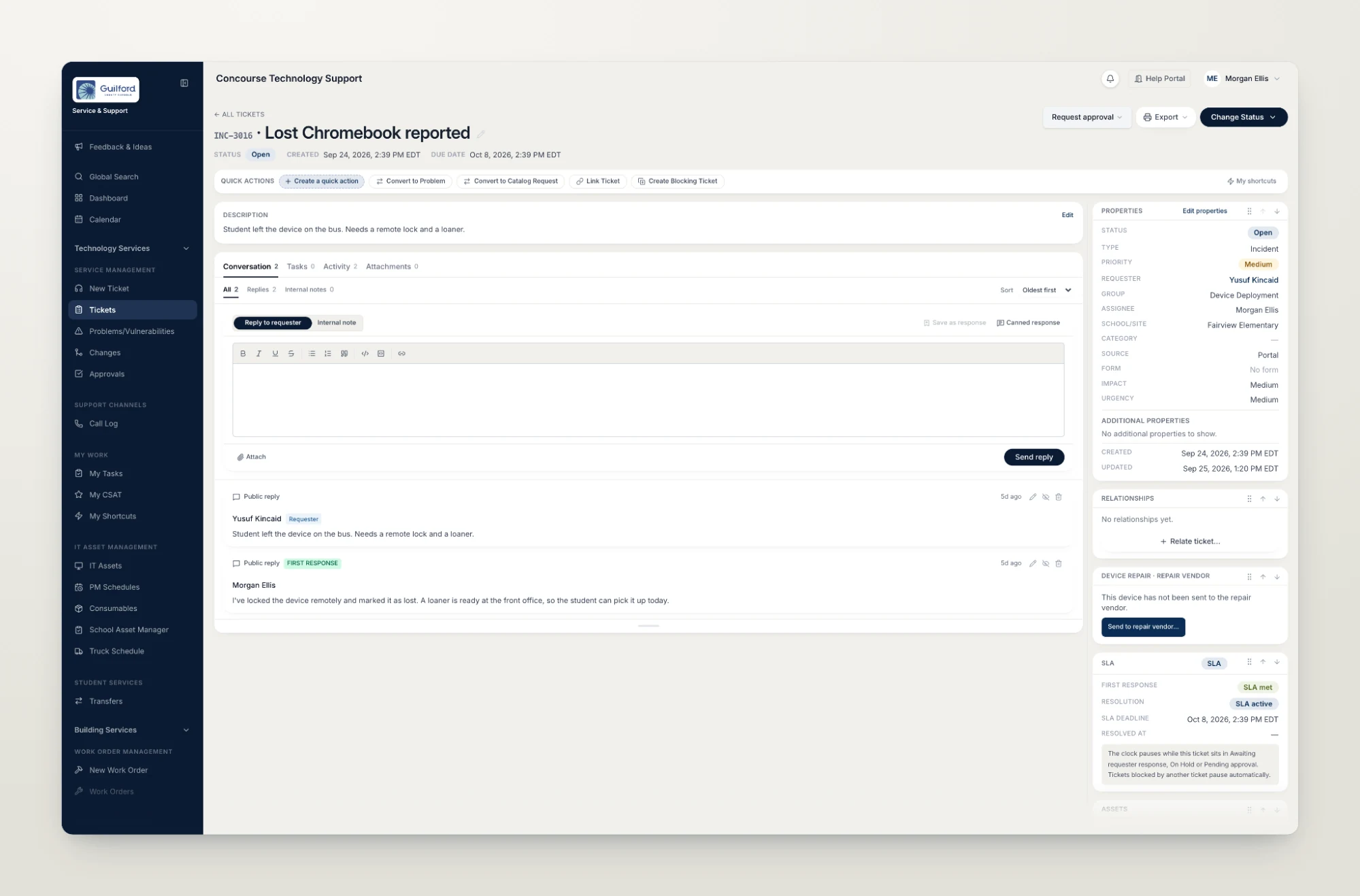
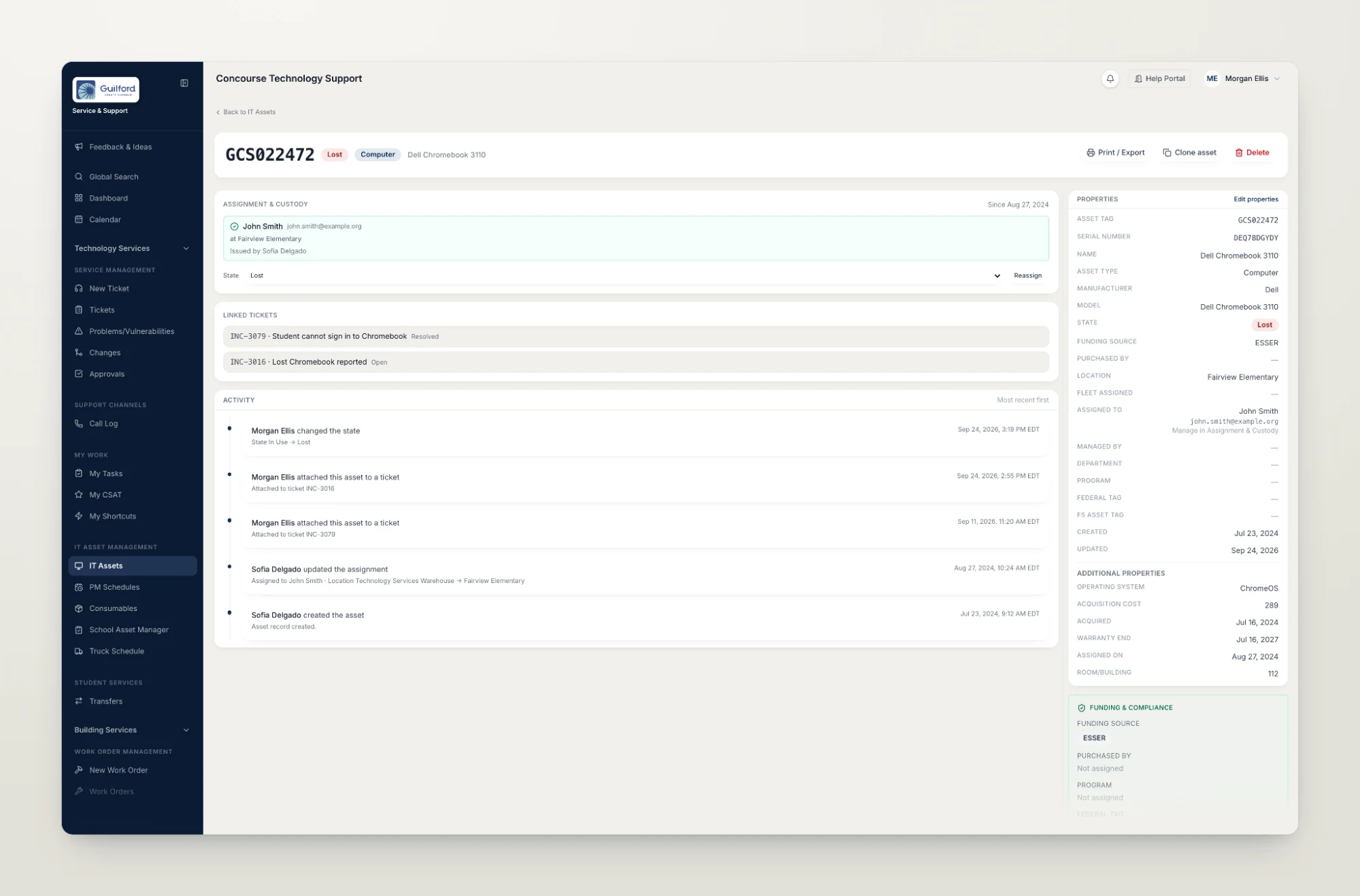
The platform also supports asset management across the district. Authorized staff can assign devices, track location and condition, coordinate repairs, and document lifecycle changes. An integration with the district’s device-management systems lets them lock and unlock lost devices without a separate application.
GCS can now manage assets beyond IT equipment, too, including its vehicle fleet, and the platform automatically creates tickets for preventative maintenance. “It’s all in Concourse—it’s not in a different system,” says Jean Lancaster, project analyst in Technology Services Project Management Office.
The results
The new platform costs GCS 55% less than its previous system and gives the district more flexibility.
School library media coordinators, who manage instructional devices at each school, have been early beneficiaries. Assigning devices to hundreds or even thousands of students at the start of the year creates a significant workload for coordinators. GCS can now give other authorized school staff temporary permissions during busy periods, spreading out the work while keeping access controls in place.
The platform is also improving the quality and consistency of GCS’s service-management data. On the previous system, people could describe the same issue in different ways, such as “unlock my device” or “unlock my Chromebook,” making reporting difficult, Lancaster explains. The new platform uses guided scenarios, which put similar requests into consistent categories. The standardized data gives Technology Services clearer insight into service demand, recurring issues, workload, and staffing needs—information the team can use for operational planning and communication to district leadership.
The platform has also allowed GCS to begin consolidating workflows that previously required separate applications, systems, or spreadsheets. Bringing those processes together provides staff with a more consistent experience and gives Technology Services greater visibility into both service activity and district assets.
“Everything we’ve asked for, we’ve gotten,” Sumner says.