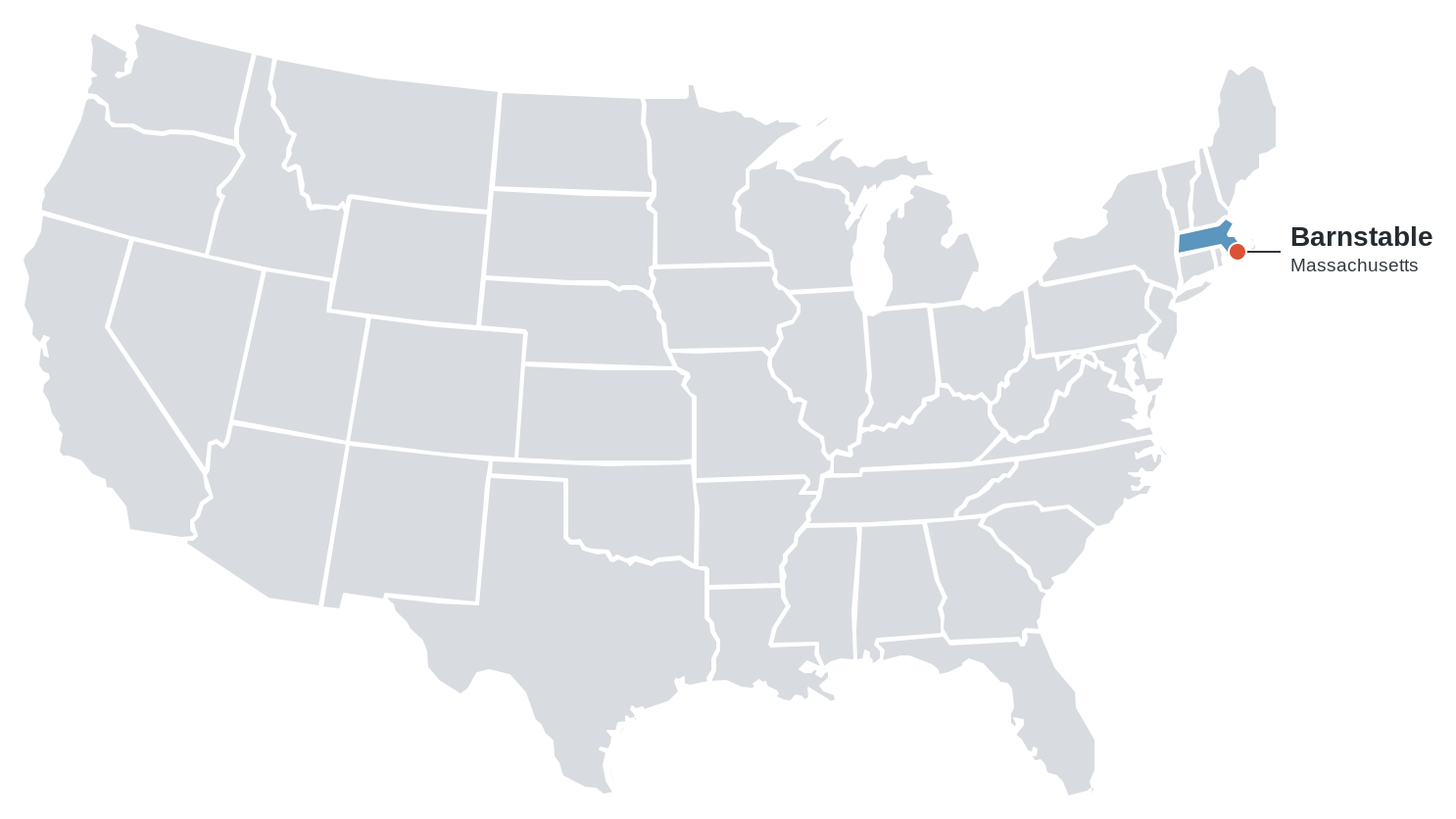
The Department of Public Works for the Town of Barnstable, Massachusetts, handles nearly 5,000 work orders a year. They cover everything from road repairs, like potholes and damaged road signs, to cleaning beaches and repairing playground equipment. Concourse delivered a new platform to assign and track all of that work in less than three months.
The problem
The system the town previously used to manage work orders left staff with a lot of manual work. When an email came in requesting work, staff had to copy and paste all of the information from Outlook into the work order system. Then they had to manually check whether the incoming request was a duplicate work order and whether the requested work was on a town or private road, because the town doesn’t maintain private roads except in emergencies. “I had this map up, I had that map up, I had the assessor’s database up so I could find out if a road was town or private,” says Amy Bernard, administrative assistant for the Highway Division of the Department of Public Works (DPW).
Whenever staff had an issue with the old system, support could be hard to reach. “I didn’t know we had a representative the whole time,” says Bernard. In March 2026, the town issued a request for proposals for a replacement.
The solution
Concourse launched the new platform 11 weeks after kickoff, and it removes much of the routine manual work created by the old system. Emails sent to the DPW’s work order addresses arrive in a triage queue on the platform, where there’s a button to convert a message into a work order with the details filled in.
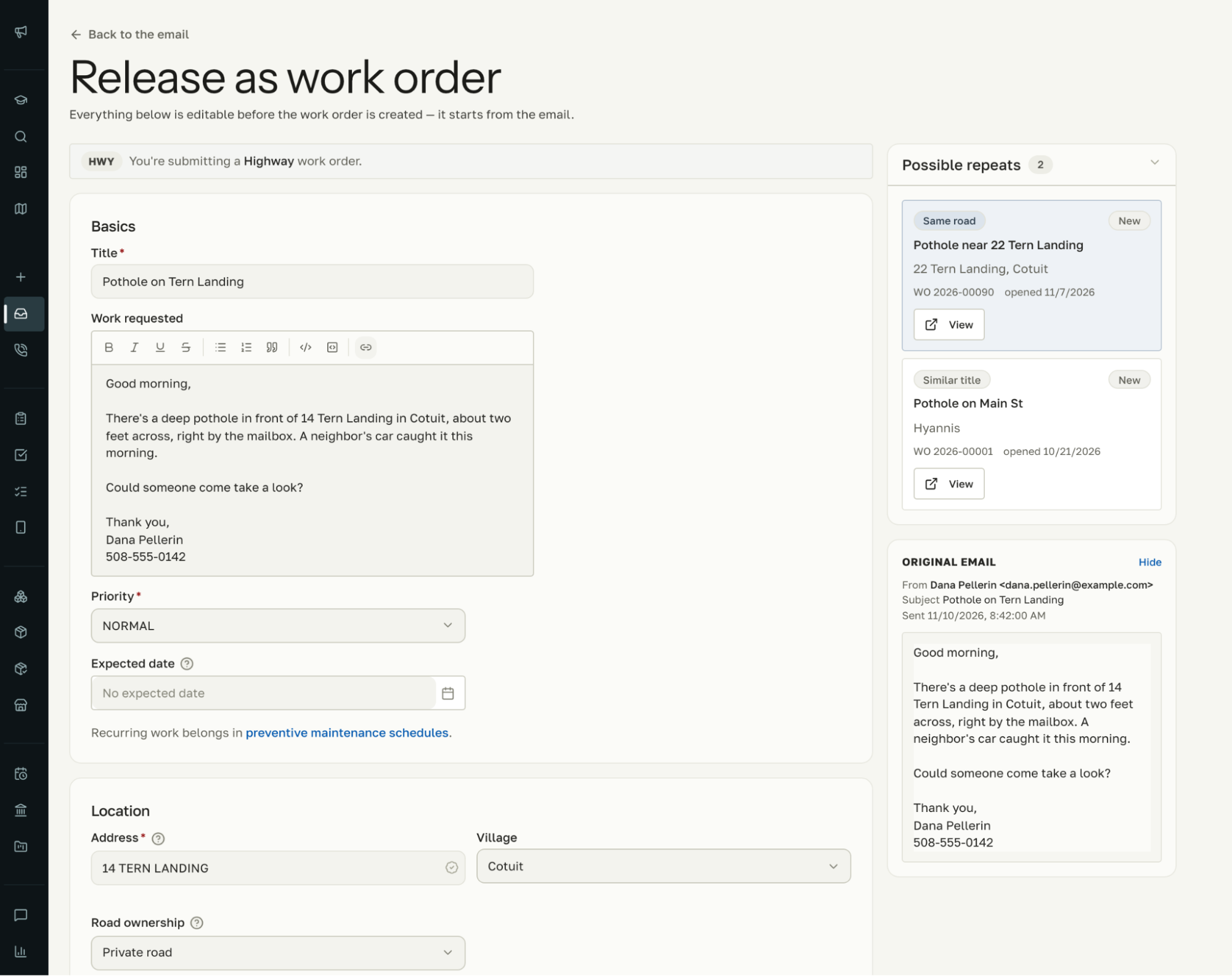
When staff enter a new work order, the platform flags potential duplicates based on the description of the work, the address, and the person who called in the problem. With the previous system, “I would search the address, I would search the problem type, I would search the person if I really wanted to exhaust all options,” says Bernard. “I don’t have to do any of that in Concourse.” When staff enter the location of a new road-based work order, the system tells them if it’s on a town or private road, saving Highway staff time they used to spend checking addresses manually.
Getting help is easier, too. “Anytime that we submitted some feedback, within a day, our issue was fixed and acknowledged,” says Bernard. Michelle Trask, executive administrative assistant for the DPW director, says the built-in feedback button on the new platform has been particularly helpful because it lets staff capture a screenshot of what they want to change. “They’re just taking all the feedback and things are happening,” she says.
The results
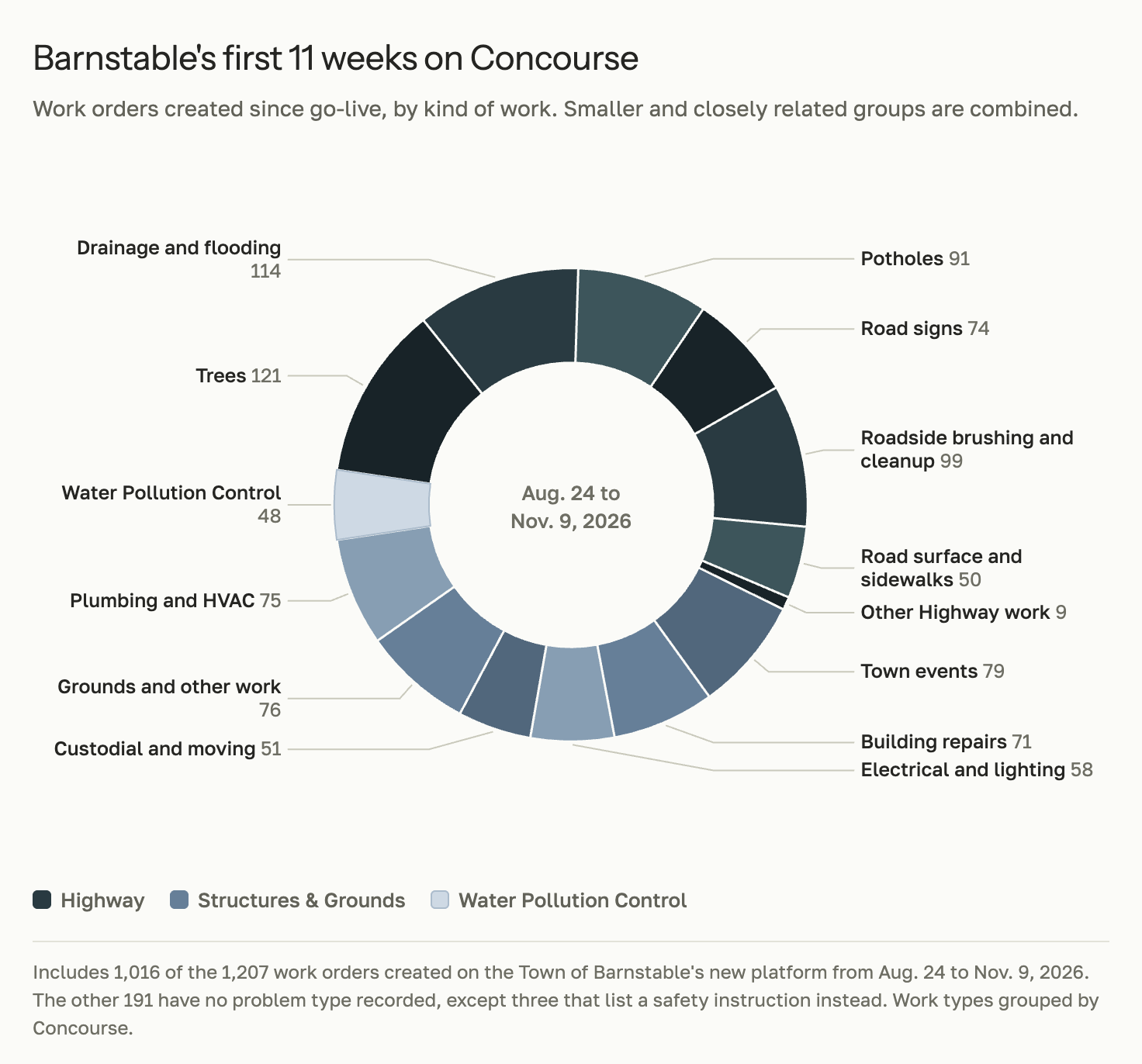
Within two and a half months of launching the platform, the town has created more than 1,200 work orders, 22% of which were converted from emails in the triage queue. Nearly 500 of the work orders had road ownership automatically filled in by the platform, saving staff time they used to spend looking for that information manually. Those work orders cover more than 100 types of work.
Next, the town plans to launch a public portal where residents can submit requests for work to be done. “We’ve never had anything like that for our community,” says Kelly Collopy, communications manager for the DPW.