Concourse delivered Owosso, Michigan, a platform that notifies residents of potential leaks in their homes, saving them from a costly surprise when the water bill arrives. Owosso bills its roughly 6,000 households quarterly, so months can pass before a resident sees how much water they’re using and what it’s costing them.
“A leaky toilet can cost someone $1,000 if they don’t catch it,” says Amy Fuller, Owosso’s assistant city manager. “Something so small can be a big deal.”
The problem
The Owosso City Council requested a simple way for residents to track their water expenses so they wouldn’t be caught off guard when it’s time to pay a bill—especially one driven up by a leak they never knew they had.
The city’s previous water portal was more limited and difficult to use. It could only tell staff whether there was continuous water use at a location, not how much water was being used. It was also hard to sign up for. Fuller spent weeks creating usernames and passwords by hand for residents who couldn’t get onto the city’s portal themselves. “It was a big part of my day,” she says.
The solution
Concourse built a platform that lets residents easily track their water use and notifies them of potential leaks in their homes. If someone’s daily use rises significantly above their average over the past 14 days, the account gets flagged as “high water usage”—and city staff can adjust that threshold. Residents who’ve signed up for the platform get an email when that happens, showing how much water they’ve used and noting it could be an early sign of a leak. Staff can also separate a one-off spike—someone filling a pool, for example—from sustained abnormal usage that may warrant intervention.
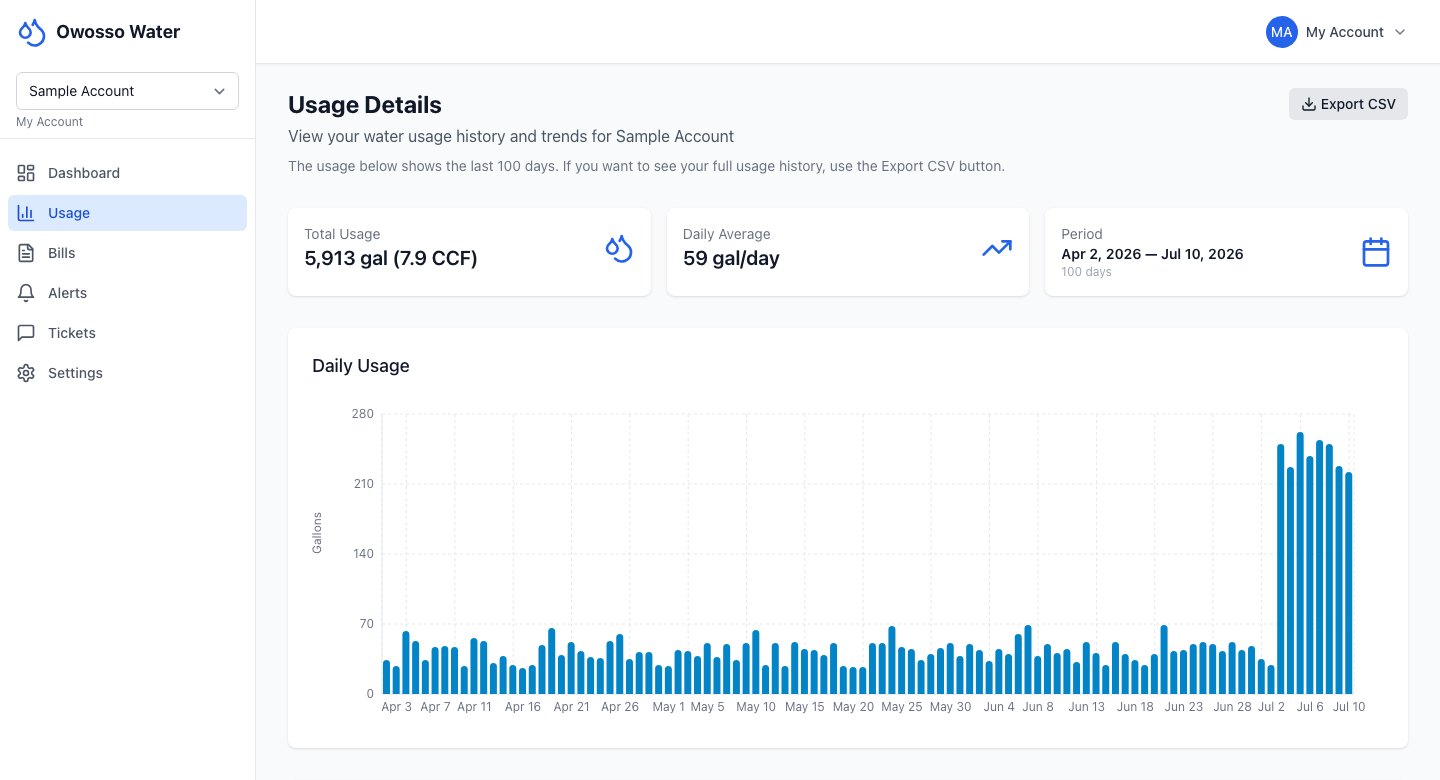
The platform connects two systems the city already had. One is Owosso’s meter-reading network, which records each meter’s water use throughout the day. The other is the city’s billing system, which holds account records and bill amounts. The platform integrates with both, so a meter’s usage, the resident attached to it, and what that resident owes all land in the same record.
Residents with questions about their water use can submit a ticket through the platform, giving them a direct line to the city. Previously, they had to call City Hall and work through the phone tree to reach the right person. “From a resident perspective, I can only imagine that being able to submit a ticket and having someone respond is a million times easier than having to call between 9 and 5 and find the right person,” says Fuller. For staff, the ticketing system turns unpredictable phone interruptions into a queue they can work through in one place.
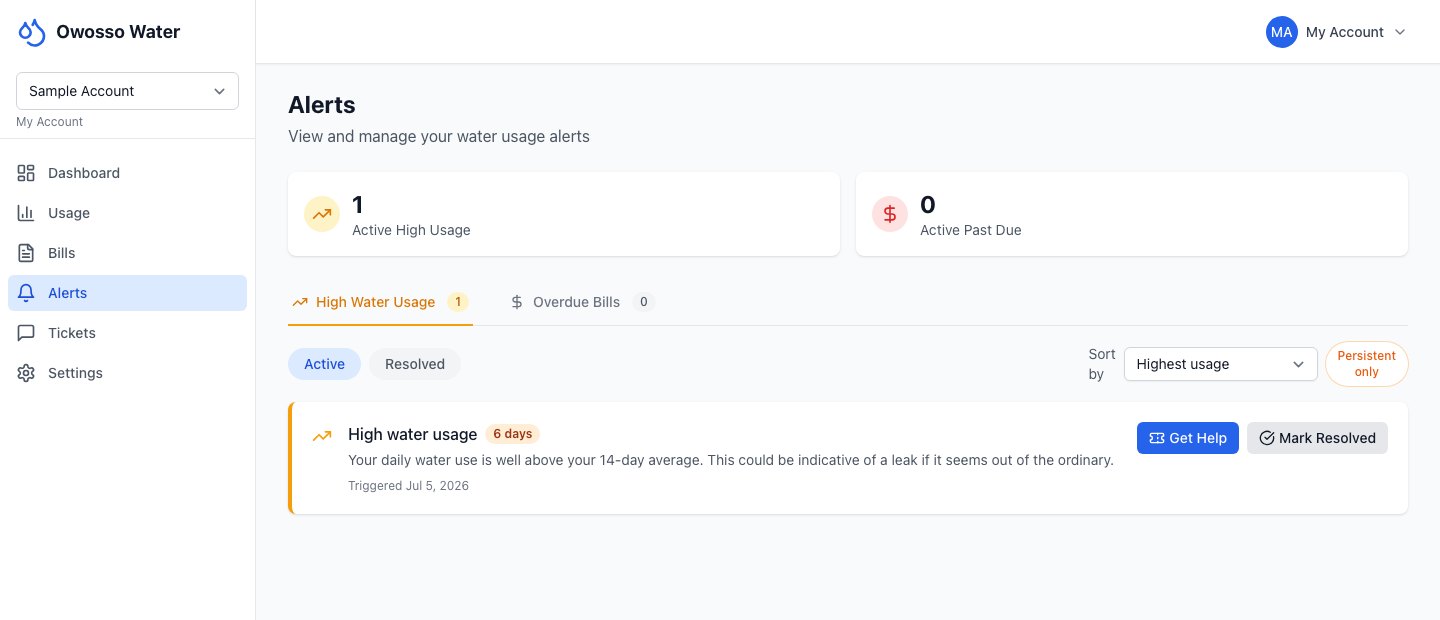
Answering a single question about a resident’s usage used to mean looking up their meter number in the meter-reading system, then tying it back to the billing system to find the matching account. Now staff search by name, address, or account number and see contact information, recent usage, recent bills, whether a bill has been paid, which alerts the resident has received, and any tickets they’ve submitted.
The results
Two months after launch, the new platform already has more than twice as many sign-ups as the previous portal. “It has been really easy to sign up for,” says Fuller.
The platform has flagged 20 to 25 likely leaks, according to the city, saving residents thousands of dollars.