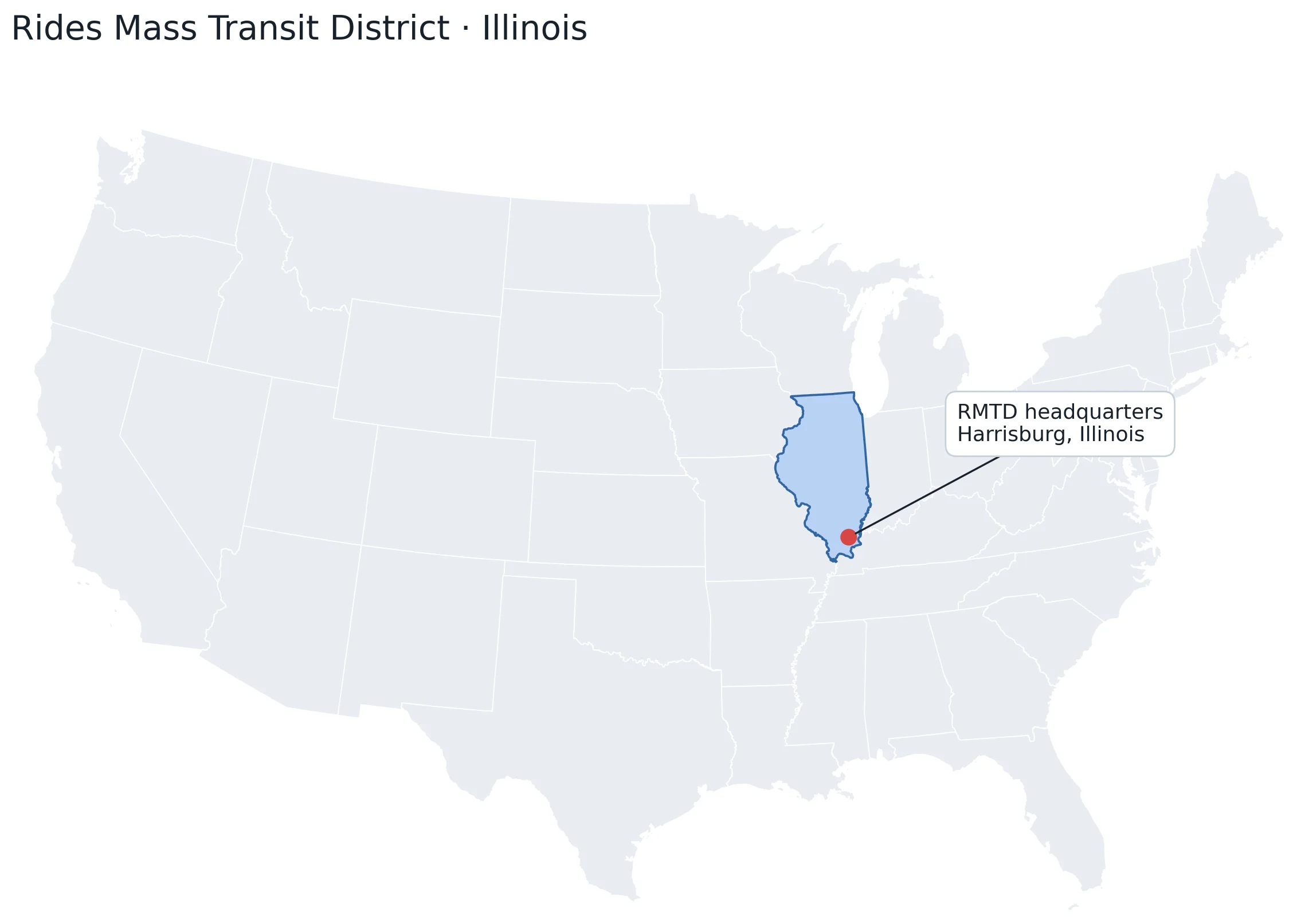
Rides Mass Transit District provided around 400,000 bus rides last year across 17 counties in southern and east central Illinois. Concourse built a platform that moves the district’s incident reporting and safety waivers off paper and onto the tablets drivers already carry.
The problem
Incident reports, safety waivers, and medical-assistance forms at RMTD previously ran on paper. If one of its roughly 105 drivers got into an accident, they would typically fill out a form after returning to the office. If a rider in the front seat chose not to wear a seatbelt, they were asked to sign a physical waiver.
Drivers needed to have their paper forms on hand. “They’d get their binder out, they’re looking ... and then they’d realize, ‘Oh I used my last one the other day,’” says Chris Edmonds, RMTD’s safety and training supervisor. If a driver didn’t have a waiver on hand, the passenger might ride without signing one. The driver would then have to remember to obtain one on a future ride—something that could slip through the cracks. If the passenger later rode in the front seat without a seatbelt and fell to the floor when the bus braked, RMTD could be left without a signed waiver on file.
Once a driver returned to their county office, the paper forms would be scanned and emailed to RMTD’s main office. From there, Edmonds would manually enter everything into spreadsheets.
The solution
Concourse built a new platform for RMTD that moves those safety forms onto the tablets drivers already use to manage pickups.
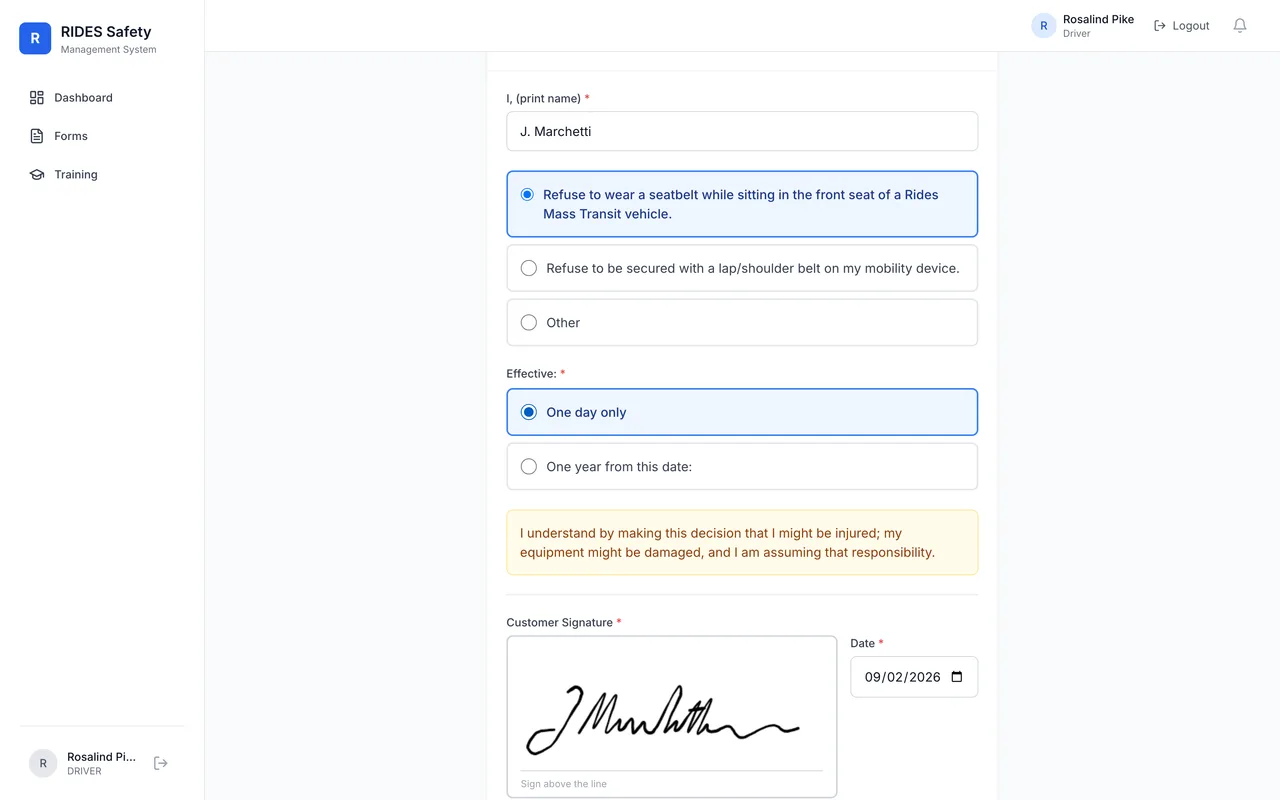
When reporting an accident, a driver enters the bus number, and the platform automatically fills in the vehicle’s year, make, and model. The driver can then complete the form, upload a photo, and log where it happened. If a passenger in the front seat chooses not to wear a seatbelt, they sign the waiver on the driver’s tablet instead of on paper. Edmonds can find all of it in one place and export the data in a spreadsheet for RMTD’s annual reporting to the Federal Transit Administration.
The platform also lets drivers report conditions that could affect service along their routes. If, for example, there’s construction on a bridge that will add 10 minutes to a trip for several weeks, they can log it as soon as they see it. That report immediately reaches Edmonds and the relevant county supervisor, allowing RMTD to alert other drivers and adjust scheduled travel times.
The results
RMTD began rolling out the platform in July and is bringing it online county by county. Beyond reducing paperwork, the platform is helping RMTD capture safety information that previously might have gone unrecorded if a driver lacked the right form or forgot to submit a report after the fact.
Drivers are happy with it, Edmonds says: “Drivers always have the form with them. They’re not having to track it or remember to turn it in at the end of the day. Now we’re able to do it in real time. They hit submit and it’s immediately sent.”
Edmonds, for his part, now spends less of his workday manually transferring information from paper forms to spreadsheets. He estimates that the new platform saves him 12 to 16 hours a week, allowing him to put the better part of two workdays back into his core safety and training work.
“Our experience with Concourse has been very good. They really wanted to make sure they understood our process and what we were trying to accomplish, and I think they did a great job on that.”